A well-organized studio is something many producers underestimate.
We often focus on synthesizers, compressors, converters or plug-ins, but the physical layout of a studio has a massive influence on creativity and productivity. If your studio is cluttered or poorly organized, you tend to spend less time making music. The workflow becomes frustrating instead of inspiring.
Over the years I realized that studio ergonomics are not a luxury — they are essential.
One of the pieces of equipment that improved my workflow significantly is something that might sound surprisingly simple: a keyboard stand.
More specifically, the K&M Spider Pro.
The Importance of Studio Ergonomics
Many home studios operate in limited spaces. Apartments rarely offer large dedicated studio rooms, so producers need to stack gear vertically and organize equipment intelligently.
Poor ergonomics can create several problems:
- difficult access to synth parameters
- uncomfortable playing positions
- cluttered studio desks
- reduced creative flow
The goal is simple: your instruments should feel immediately accessible and inviting.
If playing or adjusting a synth requires too much effort, chances are you will use it less often.
Why I Chose the K&M Spider Pro
The K&M Spider Pro is a keyboard stand that is widely used both in studios and on live stages.
At first glance it may look minimalistic or even slightly unstable, but in reality it is extremely sturdy and well engineered.
What makes it particularly interesting is its modular design.
The Spider Pro allows you to configure multiple tiers with different types of arms. This means you can adjust the ergonomics depending on the instruments you are using.
Some synthesizers require a flat playing position, while others benefit from an angled setup that improves visibility of displays and controls.
Modular Design and Flexibility
One of the most underrated features of the Spider Pro is the possibility to expand the stand.
You can add:
- additional arms for more synthesizers
- angled arms for better visibility
- accessory plates for laptops, controllers or smaller devices
These accessory plates are especially useful in compact studios where desk space is limited.
Instead of placing controllers or laptops on the main desk, you can position them directly within reach on the stand.
My Current Setup
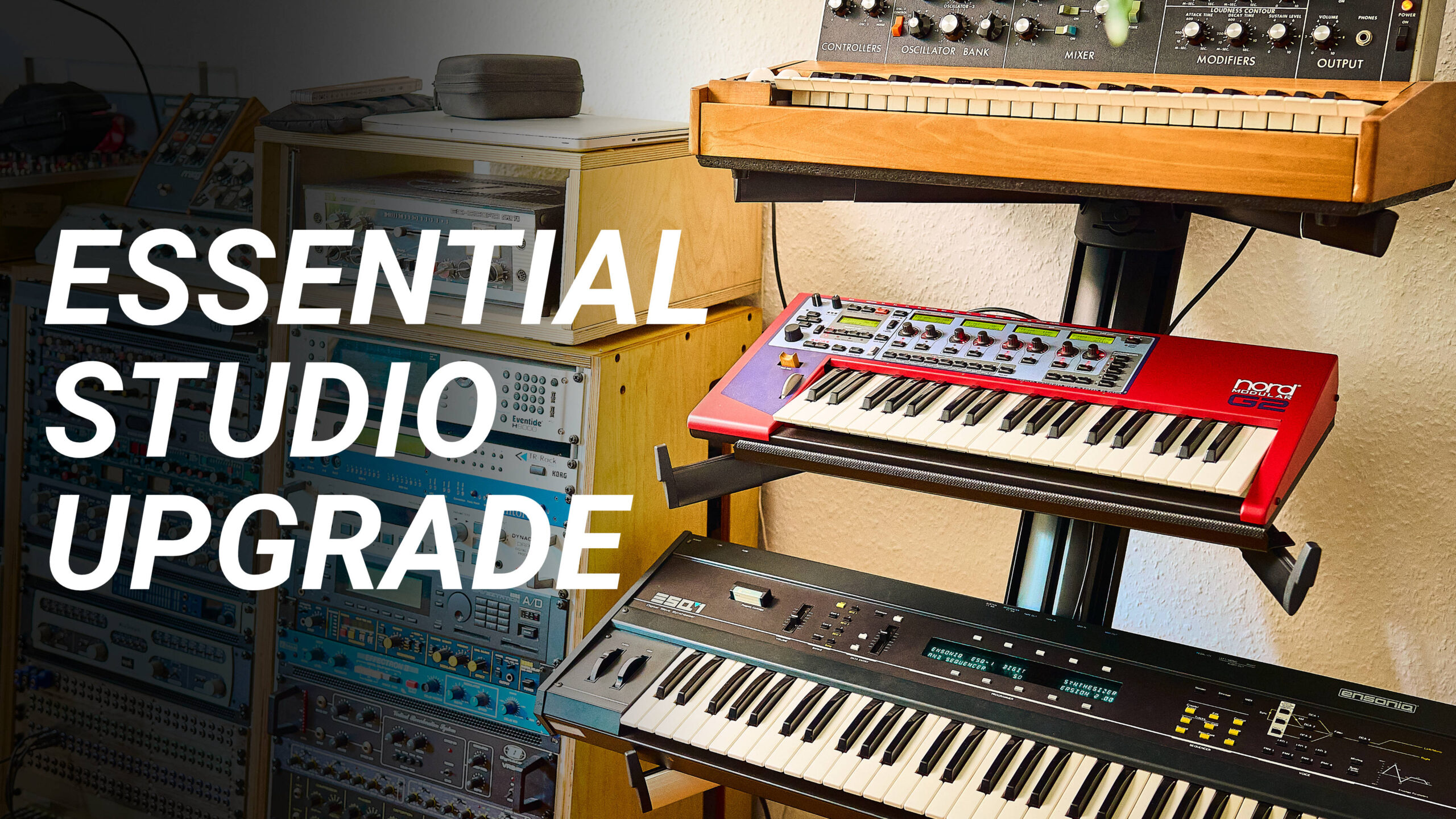
In my studio I use the Spider Pro to organize some of my favorite synthesizers.
On the upper level I keep my Minimoog, which allows easy access to all controls while standing or sitting.
On the lower tier I placed an Ensoniq ESQ-1, which benefits from the angled arms because the display and parameters are easier to see and adjust.
This layout allows me to quickly switch between instruments without interrupting the creative process.
The stand also offers small details that make a difference, such as integrated cable management, which helps keep the setup tidy.
Studio Workflow Matters
Small improvements in studio organization can have a surprisingly large impact.
When your instruments are positioned correctly and easily accessible, you naturally spend more time experimenting and playing.
The result is simple: better workflow leads to more creativity.
For me, the Spider Pro has become one of those studio essentials that quietly improve the daily experience of making music.
Final Thoughts
Not every studio upgrade needs to be an expensive piece of outboard gear.
Sometimes the most valuable improvements come from optimizing the way you interact with your instruments.
A good keyboard stand might not be the most exciting purchase at first, but it can dramatically improve the ergonomics and usability of your studio.
And ultimately, that’s what really matters: creating an environment where making music feels effortless and inspiring.
If you are interested in more studio gear, workflow tips and production tools, feel free to explore the Studio Essentials series on my YouTube channel.